Are Bed-in-a-Box Mattresses as Good as Social Media Makes Them Seem?
The bed-in-a-box industry did something traditional mattress retail had often failed to do: it made buying a mattress feel simple. A few clicks, a compact delivery and a generous trial period replaced bewildering showrooms, unfamiliar terminology and rows of apparently similar products.
For many customers, that was a genuine improvement. But as mattress buying became easier, did the way we think about mattresses become too simple?
The mattress made for social media
Mattresses are difficult products to demonstrate. Their most important qualities are experienced over hours and years, not easily captured in a photograph or short video.
Bed-in-a-box advertising found an answer.
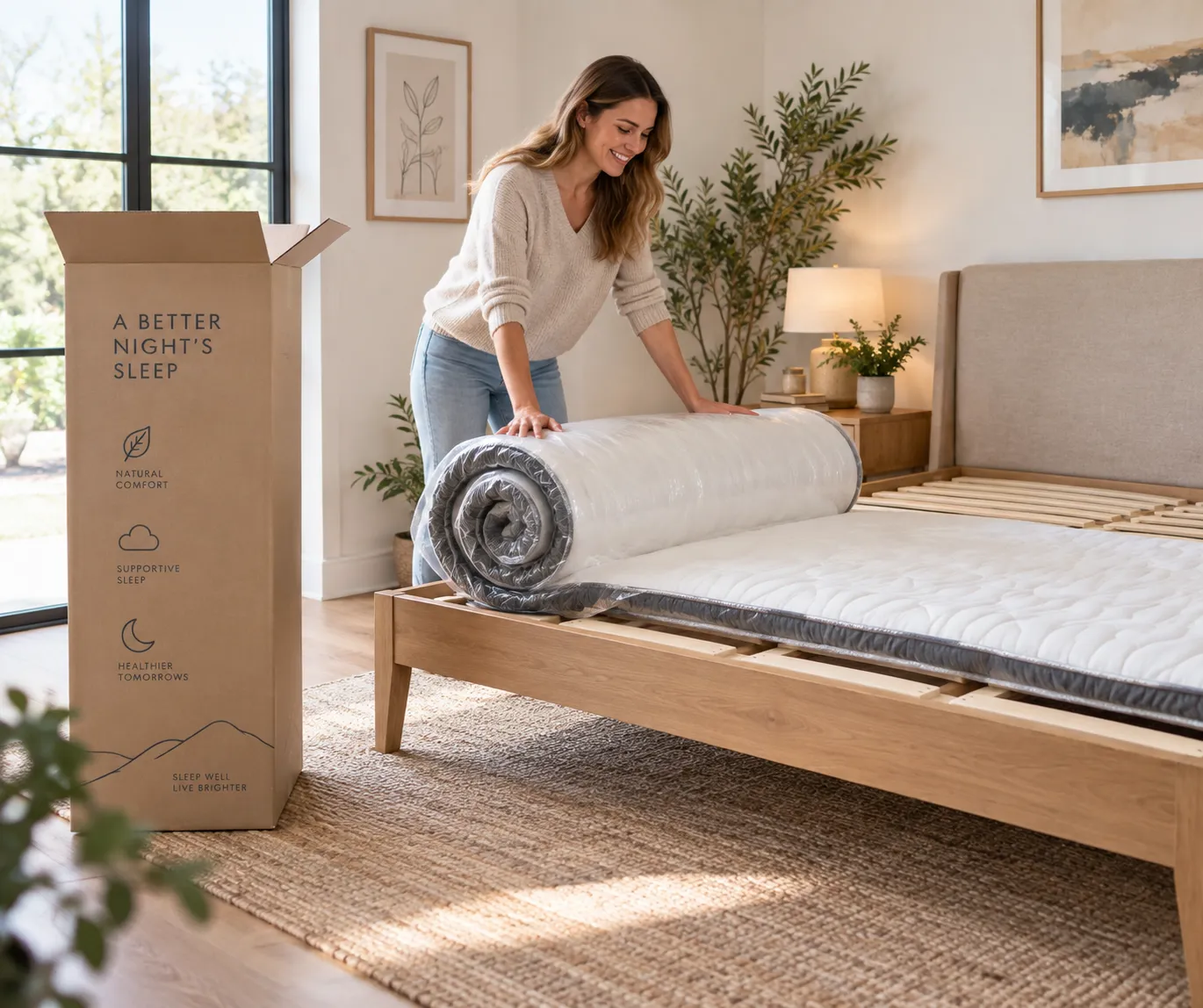
A wine glass remains upright while someone jumps on the other side of the bed. A hand presses into foam and leaves an impression that slowly disappears. A tightly rolled mattress expands before the viewer’s eyes.
These demonstrations turn unfamiliar properties into memorable images. They show motion isolation, foam recovery and convenient delivery.
What they cannot show is whether the mattress is right for the person watching.
A mattress may absorb movement impressively but feel too warm for one sleeper. It may provide generous cushioning but lack the responsiveness another person needs to turn comfortably. The softness that suits someone of a lighter build may allow a heavier sleeper to sink further than they would like.
These are differences in suitability, and suitability is much harder to demonstrate in a short video.
A genuine change for the better
Bed-in-a-box brands succeeded because they understood that mattress buying had become unnecessarily complicated.
Traditional shopping could involve dozens of models, inconsistent firmness descriptions and technical language that meant little to the person expected to sleep on the product.
Online companies offered an appealing alternative. Their ranges were smaller, their presentation clearer and their ordering process familiar. Compressed delivery made a bulky product easier to distribute, while home trials reduced some of the anxiety surrounding an expensive purchase.
At their best, these brands encouraged an old-fashioned industry to improve. They raised expectations around pricing, delivery information, customer reviews and the overall buying experience.
The problem is not that mattress buying became more convenient.
It is that a simpler buying journey can make the product itself appear simpler than it is.
A mattress is more than a choice between soft, medium and firm. That leads to a more useful question:
Not “Does this mattress look impressive?” but “Is this construction right for me?”
One mattress cannot suit everybody
The broad appeal of a medium-feel mattress is easy to understand. It avoids the extremes and may feel immediately acceptable to many people.
But “suits many” is not the same as “suits everyone”.
A lighter side sleeper may need enough surface cushioning to reduce pressure around the shoulder and hip. A heavier sleeper may require greater underlying support to prevent excessive sinking. Someone who sleeps on their back may prefer a steadier feel, while a person with reduced mobility may find a more responsive surface easier to move across.
Temperature matters too. Some sleepers enjoy the close, enveloping sensation associated with memory foam. Others find the same feeling uncomfortable, particularly if they naturally sleep warm.
Sharing introduces another complication. Two partners may have different weights, sleeping positions and comfort preferences, yet they are often expected to choose one mattress tension.
The bed beneath the mattress also influences the result. A sprung divan, rigid platform or slatted frame can change how a mattress feels, as can the condition and spacing of the slats.
None of this makes a widely marketed mattress unsuitable. It simply means no mattress can guarantee the same experience for every sleeper.
The box influences the mattress
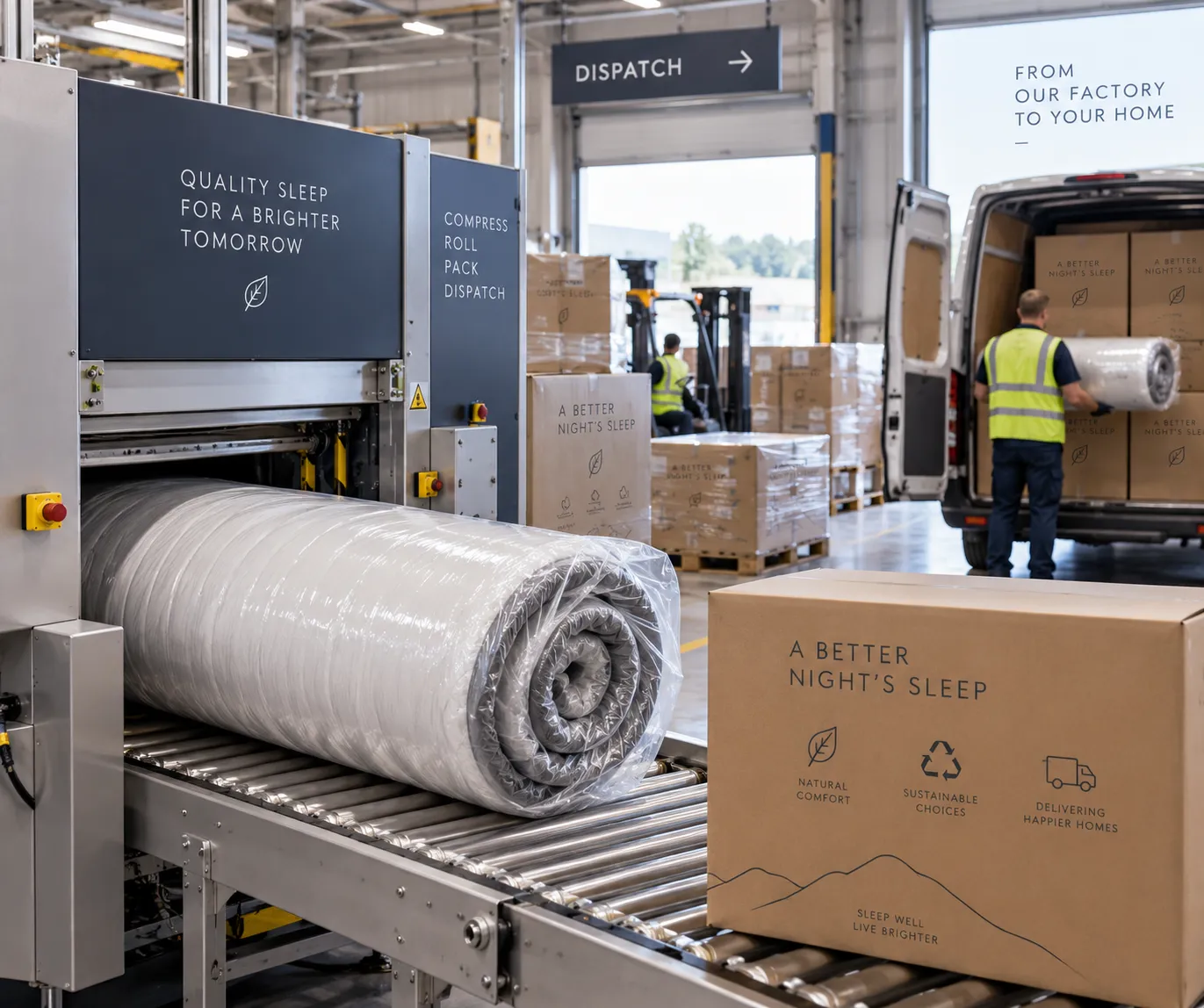
Compressing and rolling a mattress is a genuine logistical innovation. It makes storage and transport more efficient and allows a large product to pass through ordinary delivery networks.
But the delivery method also influences how the mattress is engineered.
A product intended to withstand tight compression needs components that can be rolled, stored and expected to recover after opening. Foam layers and certain compact spring systems lend themselves readily to this process.
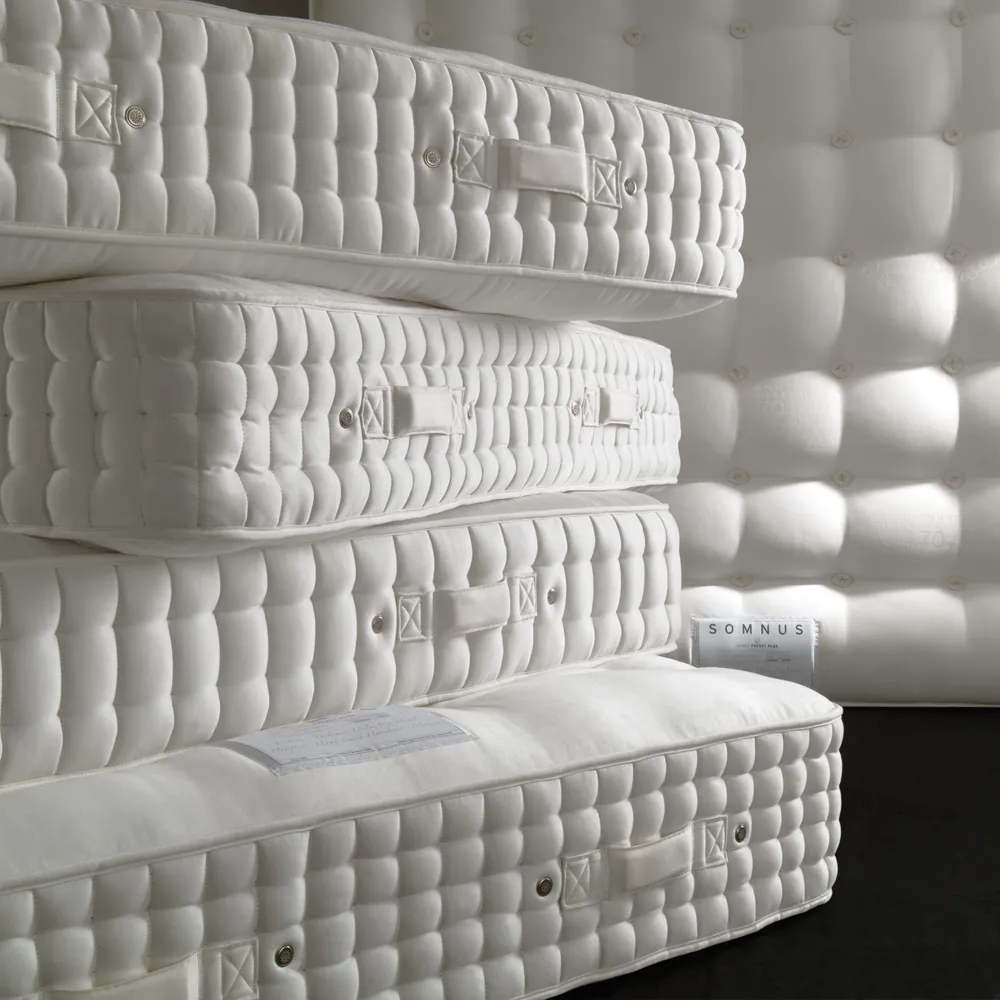
Deeply upholstered constructions containing substantial layers of wool, cotton, horsehair, hemp or flax may be less suited to aggressive compression. They may also use hand tufting, side stitching and more complex spring arrangements.
These features are not automatically superior, and a mattress does not become inferior simply because it arrives rolled.
The point is that convenience affects engineering. A mattress designed to travel in a compact box has been created with that journey in mind. A deeply upholstered, hand-finished mattress may have been designed around different priorities.
Foam is useful, but not all foam is equal
Foam has a legitimate place in mattress construction.
It can provide consistent cushioning, distribute pressure and reduce movement across the bed. For couples, lower motion transfer may be particularly valuable. Different foam layers can also be combined to create a wide range of comfort profiles.
The difficulty is that “foam” describes a broad family of materials, not a single standard of quality.
Density, depth, resilience and composition influence how foam contours, recovers and changes with use. Yet this information is often missing from consumer-facing product descriptions.
A mattress may be presented as cooling, supportive or pressure relieving without explaining how much foam it contains, what grade has been used or what each layer is intended to do. Two mattresses that appear similar when new may therefore perform differently over time.
Some sleepers find that slow-response foam holds warmth around the body or creates a sinking sensation. Its close contouring can also make changing position feel less effortless, which may matter to people who move frequently or have reduced mobility.
Others value precisely those characteristics. They want a quieter, more enveloping surface with less bounce and less disturbance from a partner.
The concern is not that foam has no place in a good mattress. The Bed Specialist itself offers memory foam and foam-containing hybrid models alongside sprung, latex and natural-filling alternatives.
The problem begins when one foam-led design is presented as though personal differences no longer matter.
What is actually inside the mattress?
Most mattress advertising concentrates on the outer experience: softness, firmness, cooling, support or undisturbed sleep.
Inside, different materials perform different roles.
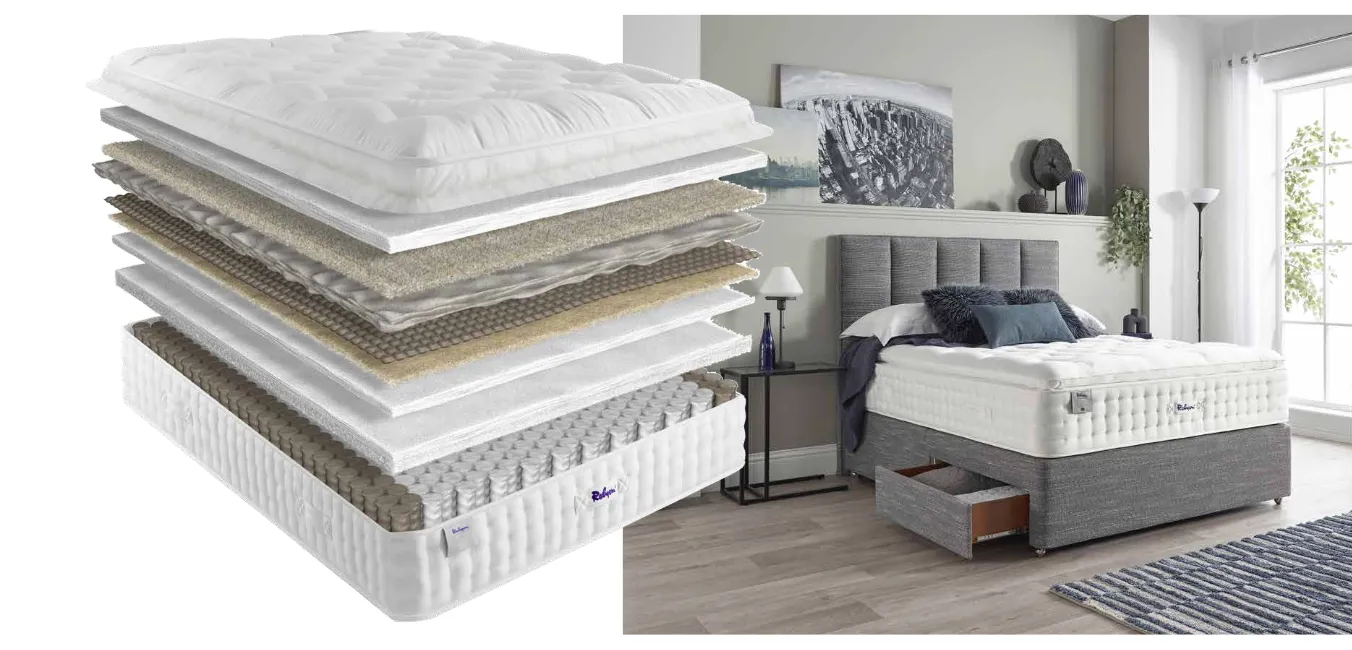
Springs can provide support and responsiveness. Foam can add cushioning and motion isolation. Wool and cotton are commonly used in upholstered mattresses, while horsehair, alpaca, hemp and flax may form part of more complex natural-filling constructions.
A list of attractive materials does not automatically create a suitable mattress. Their quality, quantity and arrangement matter, as does their relationship with the spring system and bed base.
Materials also change with use. Upholstery can settle, foam can soften and different constructions require different care. Understanding what is inside helps buyers assess comfort, temperature, maintenance and long-term value rather than relying on appearance, branding or price alone.
The questions social media rarely asks
A recent Times investigation, “Wake up! Your mattress is full of toxic flame retardants”, examined flame-retardant chemicals used in UK foam mattresses and questioned whether Britain’s stringent fire-safety requirements have encouraged greater chemical use than consumers realise.
The headline is stark, but the investigation raises a reasonable underlying question: how much do people know about the materials inside the mattresses they sleep on every night?
The Furniture and Furnishings (Fire) (Safety) Regulations require components used in upholstered products to meet fire-performance standards, including open-flame testing for foam fillings. The Government has acknowledged concerns about the health and environmental effects of chemical flame retardants and the reliance on them created by the existing system.
A government consultation published on 31 March 2026 proposed replacing mandatory open-flame testing with requirements based on a smoulder test. Its stated aim is to maintain a high level of fire safety while meaningfully reducing reliance on chemical flame retardants. The consultation closed on 23 June 2026, but the proposals remain under review and have not replaced the current framework.
This does not mean every foam mattress contains the same substances, that a compliant mattress is unsafe, or that natural fillings are automatically free from treatments.
It does make asking questions reasonable.
What type and quantity of foam have been used?
How has the mattress been made compliant with fire-safety requirements?
What information does the manufacturer provide about its materials, construction and expected lifespan?
These details are not always easy to find on a product page. Specifications may describe a mattress as cooling, supportive or pressure relieving without explaining how particular materials have been used or treated.
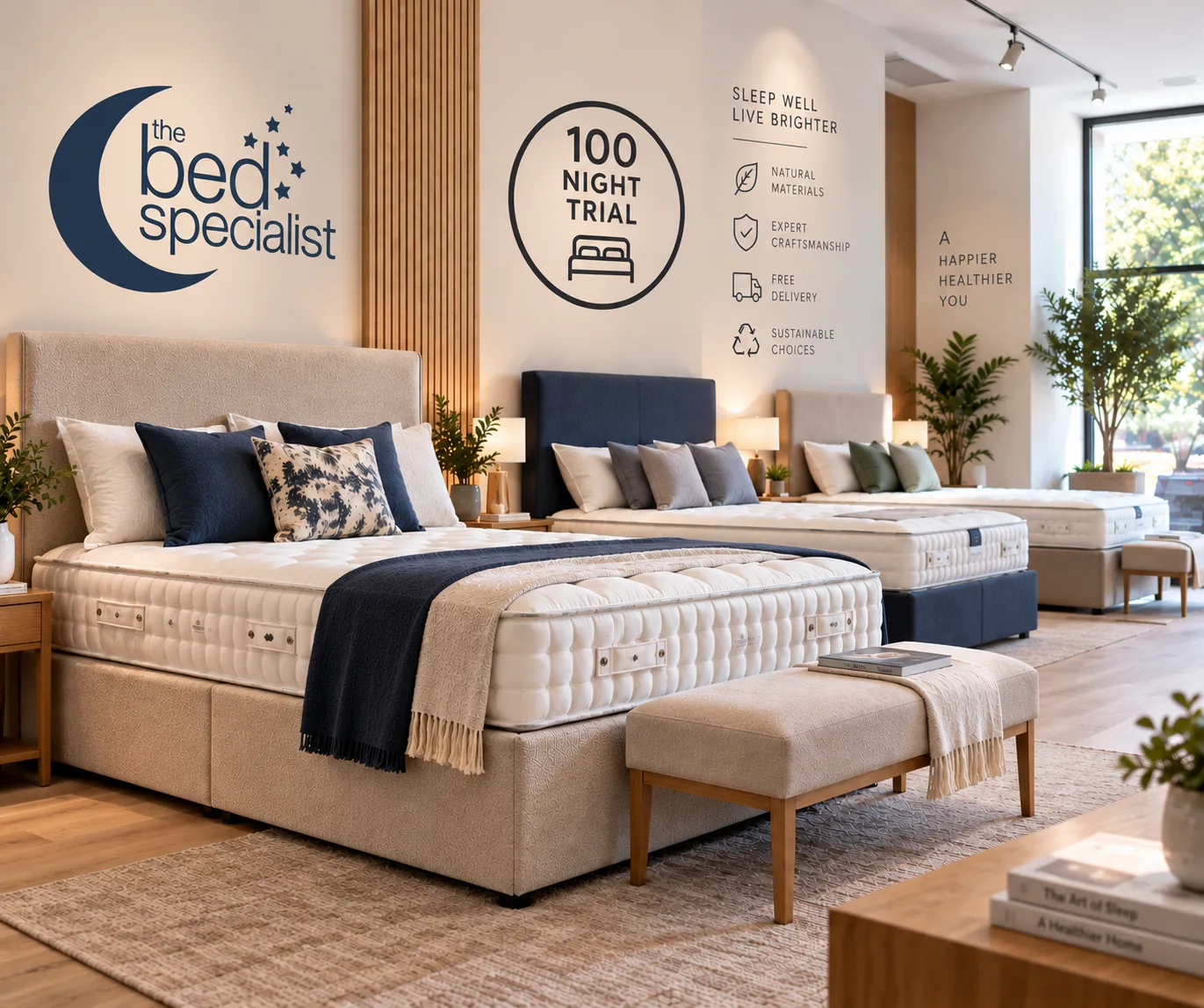
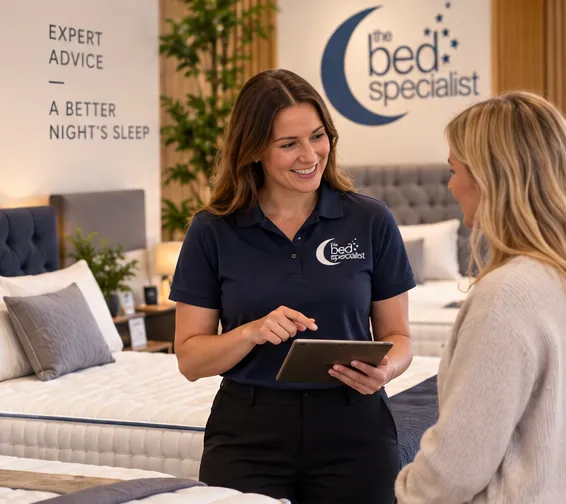
That is where access to a knowledgeable retailer can help. Customers can call The Bed Specialist or visit its Yeovil showroom to ask about construction, compare different materials and receive advice from an independent specialist retailer that is not limited to one mattress type or method of delivery.
These questions are less visually appealing than a wine-glass demonstration.
They may tell the buyer considerably more.
A trial period is useful, but it is not expert advice
Home trials were another genuine improvement introduced by online mattress brands. They allow customers to experience a mattress through complete nights of sleep rather than relying on a few minutes in a showroom.
But a trial does not make the initial choice more informed. It provides a route out if the choice proves unsuccessful.
The customer must still judge whether the mattress offers suitable support, pressure relief, temperature regulation and ease of movement. If it feels wrong, they must then identify why.
Was the mattress too soft, or was the underlying support unsuitable? Was excess warmth caused by the mattress, protector, bedding or room? Would a firmer replacement solve the problem, or create uncomfortable pressure elsewhere?
Without guidance, the second decision can involve much of the same guesswork as the first.
Trials remain a valuable safeguard when their terms are clear. The stronger approach is to combine that safeguard with careful selection beforehand.
The Bed Specialist offers a 100-night comfort-exchange scheme on qualifying mattresses tried and purchased in its Yeovil showroom. Customers must purchase and use a qualifying mattress protector, sleep on the mattress for at least 30 nights and meet the scheme’s other conditions. It is an exchange rather than a money-back guarantee.
A trial can reduce the consequences of choosing badly. Good advice aims to improve the chances of choosing well in the first place.
Why showrooms still matter
Online research has made mattress buying more informed. Customers can compare prices, study materials and understand the broad differences between foam, spring and hybrid constructions before speaking to a retailer.
But a mattress remains a physical product, and comparison becomes more useful when the differences can be felt.
Trying several mattresses in one visit may reveal distinctions that are difficult to imagine from product descriptions. One may allow the shoulder to settle more comfortably. Another may provide a more stable edge. A third may feel easier to turn on, even though all three are described as medium.
An experienced adviser can help interpret those differences. They can relate what the customer feels to their sleeping position, body weight, mobility, partner and existing bed base rather than leaving them to decide whether “comfortable” means soft, supportive or simply unfamiliar.
A showroom test cannot reproduce a full night’s sleep. Its value lies in comparison and informed selection.
A home trial may reveal how a mattress performs over time. A showroom visit can help narrow the field before that trial begins.
Choose the mattress, not the marketing
The best mattress is not defined by whether it arrives in a box, contains foam or comes with a lengthy trial. It is defined by how well its construction suits the people sleeping on it.
Bed-in-a-box brands made mattress buying easier, and the wider industry is better for many of the changes they introduced. But convenience cannot remove the differences between sleepers, materials and methods of construction.
The aim is not to make mattress buying complicated again. It is to recognise that something used every night deserves more consideration than a persuasive advert or an impressive unboxing video.
 4.9 Rating on Trustpilot